Selamat Datang di Penerbit Az-Zahra Media Society
Penerbit Az-Zahra Media SocietyPenerbit Az-Zahra Media SocietyPenerbit Az-Zahra Media Society
(Senin - Sabtu)
zahramedia.society@gmail.com
Percut Sei Tuan, Sumatera Utara
Penerbit Az-Zahra Media SocietyPenerbit Az-Zahra Media SocietyPenerbit Az-Zahra Media Society

ISLAMIC ECONOMICS IN CONTEMPORARY POLITICAL AND GLOBAL CONTEXTS
  • Home
  • Buku
  • ISLAMIC ECONOMICS IN CONTEMPORARY POLITICAL AND GLOBAL CONTEXTS

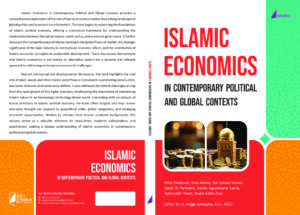
ISLAMIC ECONOMICS IN CONTEMPORARY POLITICAL AND GLOBAL CONTEXTS


Penulis: Atina Shofawati, Erny Arianty, Teh Zahara Yacoob, Galuh Tri Pambekti, Novita, Agusdiwana Suarni, Syahruddin Yasen, Wushi Adilla Arsyi

Editor: Dr. H. Angga Syahputra, S.E.I., M.E.I.

Jumlah Halaman: xiv + 190 halaman

ISBN: Proses Pengajuan

Jenis KertasHVS

Harga: Rp. 105.000

Sinopsis:

Islamic Economics in Contemporary Political and Global Contexts provides a comprehensive exploration of the role of Islamic economics within the evolving landscape of global politics and economic transformation. The book begins by examining the foundations of Islamic political economy, offering a conceptual framework for understanding the relationship between Shariah principles, public policy, and economic governance. It further discusses the competitiveness of Islamic banking in the global financial market, the strategic significance of the halal industry in international economic affairs, and the contribution of Islamic economic principles to sustainable development. These discussions demonstrate that Islamic economics is not merely an alternative system but a dynamic and relevant approach to addressing contemporary economic challenges.

Beyond commercial and developmental dimensions, the book highlights the vital role of zakat, waqaf, and other Islamic social finance instruments in promoting social justice, economic inclusion, and community welfare. It also addresses the ethical challenges arising from the rapid growth of the digital economy, emphasizing the importance of maintaining Islamic values in an increasingly technology-driven world. Concluding with an analysis of future directions in Islamic political economy, the book offers insights into how Islamic economic thought can respond to geopolitical shifts, global integration, and emerging economic opportunities. Written by scholars from diverse academic backgrounds, this volume serves as a valuable reference for researchers, students, policymakers, and practitioners seeking a deeper understanding of Islamic economics in contemporary political and global contexts.